Echoes of the Abyss is a body of work that addresses the critical yet often overlooked issue of chemical weapons dumped on the ocean floor. These remnants of past conflicts disrupt biodiversity, water chemistry, and ecological balance, acting as environmental time bombs.
Building on preliminary research conducted during the artist’s residency aboard the research vessel Tara Ocean Foundation in the Baltic Sea and continued during the MADE IN Platform in the Kvarner region of the Adriatic Sea, this project integrates an interdisciplinary approach, exploring the interactions between decaying munitions, marine organisms, and broader ecological systems
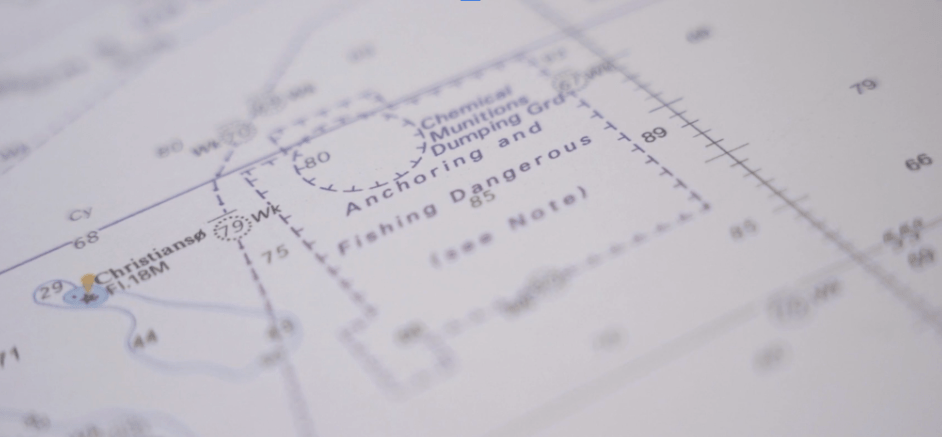
Echoes of the Abyss is a research-based art project that maps submerged conflict and unseen damage, inviting reflection on invisible violence, ecological harm, and shared responsibility as war continues in water, sediment, and living bodies.
With Echoes of the Abyss, Robertina Šebjanič explores the complex relationships between history, the marine environment, geopolitics, and the human footprint, charting submerged landscapes of harm not only as zones of contamination and presence of slow-violence, but also as spaces of memory and resilience..
The work builds on the initial research conducted aboard the Tara expedition vessel in 2023, where Šebjanič studied the contamination of marine environments by decaying munitions in the Baltic Sea. This research has been further extended to include the Adriatic region revealing how geopolitical histories marked by conflict leave enduring marks on the environment.
Abandoned unexploded ordnance (UXO) left behind by conflicts lie scattered on the seabed around the world’s oceans, seas, rivers, and lakes, posing environmental and ecological dangers. As the corroding shells thin over time, they begin to seep into the seafloor, releasing hazardous chemicals into groundwater and seawater alike, destabilising the delicate balance between the human and more-than-human worlds.
Through this multifaceted approach, Echoes of the Abyss invites viewers and listeners to confront the long-lasting, often invisible consequences of war, and to reflect on the urgent need to care for the aquatic ecologies that sustain life- both near and far, now and into the future.
Prior to creating the series of artworks, the artist organised the interdisciplinary symposium Ocean Around Us – Echoes of the Abyss bringing together experts from ecology, geopolitics, culture, and diving to explore the environmental impact of decaying munitions and foster collaborative approaches to marine conservation.
The installation has two variations, each centered on a video essay. The first focuses on the Baltic and North Seas, representing the fragility of flatfish with delicate glass objects. The second maps the Adriatic Sea, paired with a hand-tufted wool carpet that creates a warm, immersive space to engage with the realities of unexploded ordnance and chemical pollution. Together, they merge visual, sonic, and material elements to explore both vulnerability and resilience in marine ecologies

ECHOES OF THE ABYSS – TOXIC LEGACIES OF OCEANIC ECOLOGIES
Artist (video, audio, text, installation) Robertina Šebjanič
Production: TARA Ocean Foundation (FR) 2023/2024 // MADE IN Platform – Oaza and Drugo more (HR), 2024/25 // Zavod Projekt Atol (SI), 2024/25
Advisors: dr. Nataša Rogelja, Dr. Matthias Brenner, Prof. Dr. Jacek Bełdowski, Dr. Manca Bajec
Collaborators: Ivanka Pasalic (glasswork), Marjeta Zornada,Tanja Minarik (photo, video support, AI), Rok Kovač (audio mastering), Dmitry Morozov – VTOL, David Drolc and Jakob Grčman (tech support), Nema Mekota (rendering)
Special thanks to for providing archival AV materials: Diving Team of the Lučko Anti-Terrorist Unit, Special Intervention Police Unit Rijeka, Special Intervention Police Unit Osijek, Dr. Matthias Brenner and the Alfred Wegener Institute Helmholtz Centre for Polar and Marine Research (AWI) and the REMARCO project

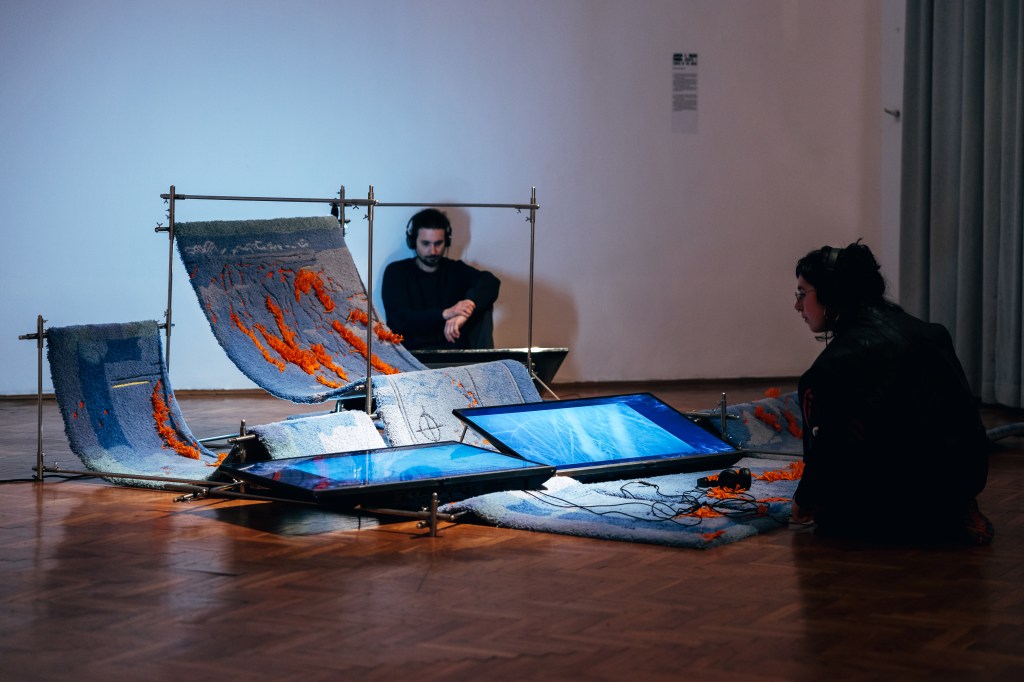
photo by Borut Brozović, at a group exhibition at Drugo More / Filodrammatica Gallery: (Un)Tamed Sea; MADE IN PLATFORM (OAZA/DRUGO MORE)
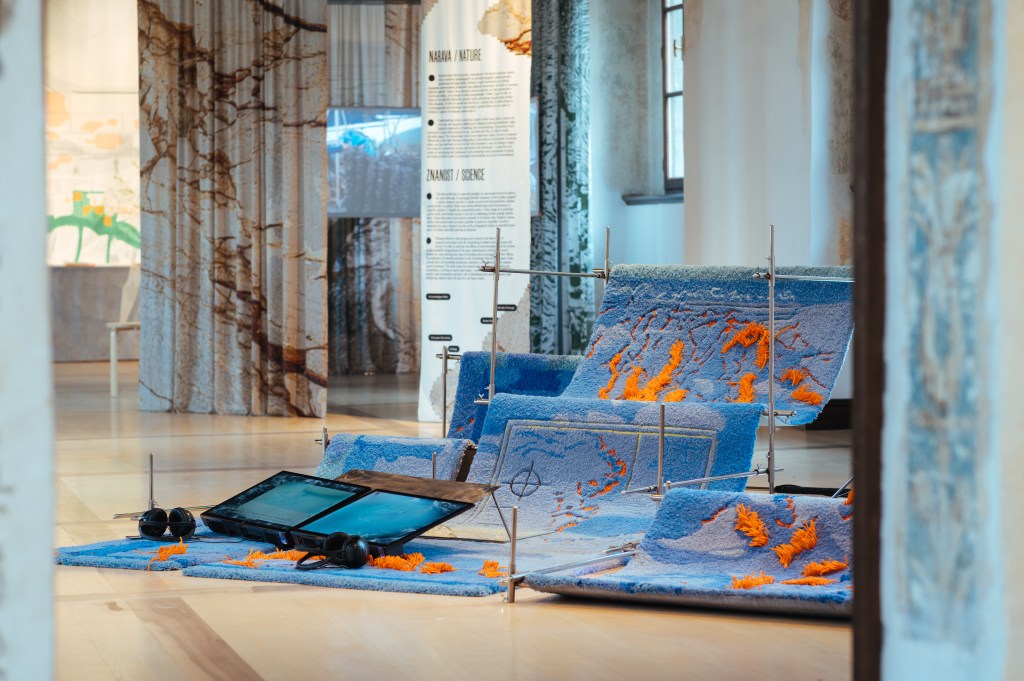
photo by Museum of Ahitecture adn Design Ljubljana – MAO Made In exhibition
Interview by Ivana Borovnjak: Navigating the Depths: An Interview with Robertina Šebjanič The intersection of art, science, and marine ecosystems as an introduction to the residency in Croatia: https://madein-platform.com/dialogue/navigating-the-depths-an-interview-with-robertina-sebjanic/
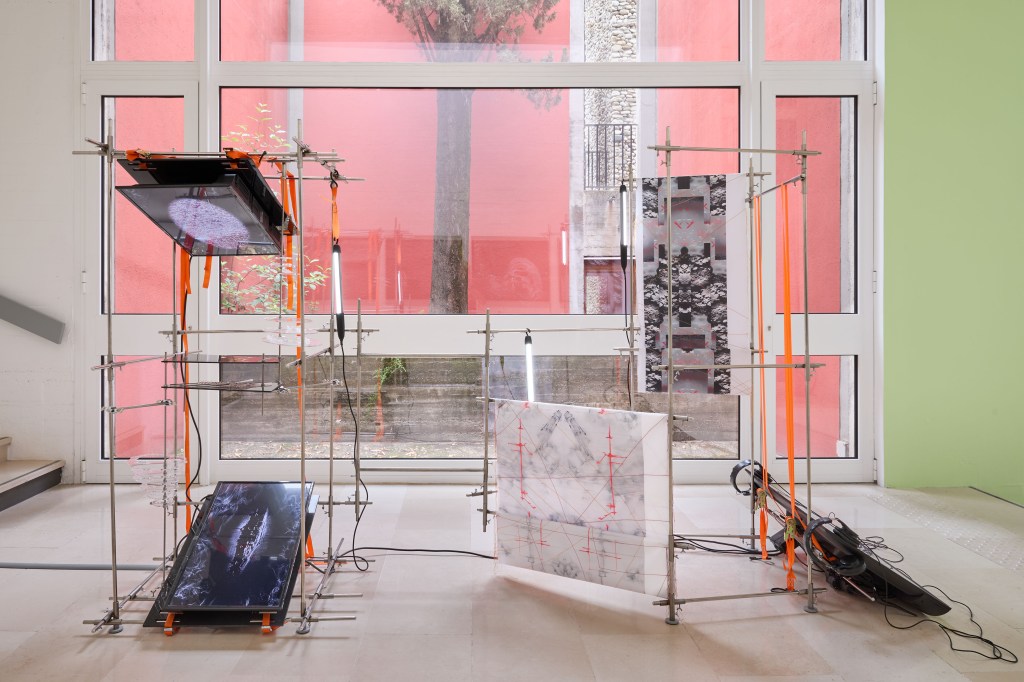
Echoes of the Abyss by Robertina Šebjanič part of exhibition: Becoming Ocean: A Social Conversation About the Ocean // A group exhibition presented by La Villa Arson, TBA21–Thyssen-Bornemisza Art Contemporary, and the Fondation Tara Océan ( Biennale of Arts and the Ocean in Nice) //in the framework of the United Nations Ocean Conference (UNOC3)
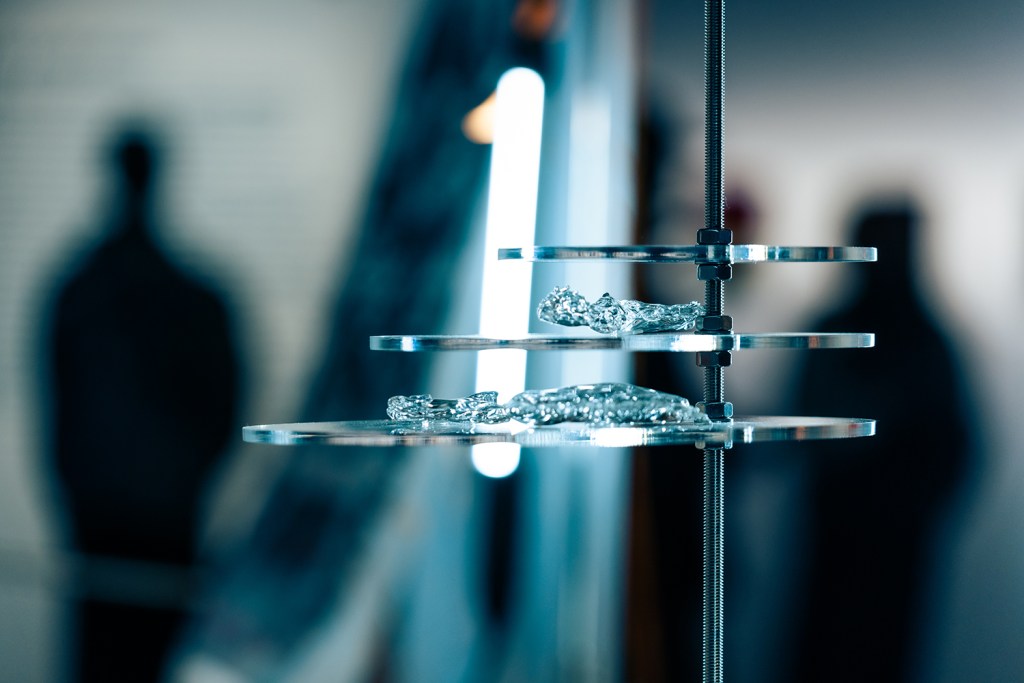
Echoes of the Abyss by Robertina Šebjanič part of group exhibition La Grande expédition Tara, l’art et la science pour révéler l’Océan at The CENTQUATRE-PARIS
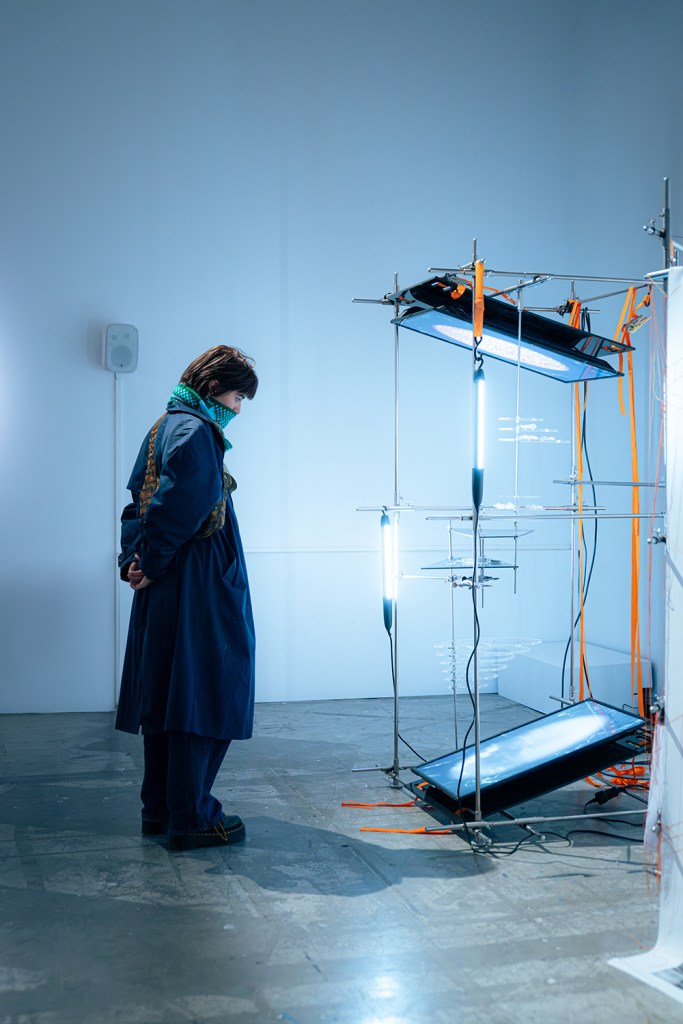
COLLABORATION – Echoes of the Abyss :
Echoes of the Abyss is a highly collaborative project that bridges art, science, and environmental research across Europe, as well was intense collaboration with different artisans / crafts people to realise the work.
The work began during a residency aboard the Tara Ocean Foundation in the Baltic Sea (from Aarhous to Riga), where the artist collaborated and also meet in Sopot, Poland during the layover, with experts such as Prof. Dr. Jacek Bełdowski (Polish Academy of Sciences) who has coordinated multiple projects on dumped munitions in the Baltic Sea and Dr. Miłosz Grabowski, Oceanographer / Hydrographer, Marine Acoustics Laboratory, Institute of Oceanology PAS, Sopot Poland and others marine scientists, ecologists, and oceanographers who study the ecological impacts of decaying munitions and chemical weapons on marine biodiversity and water chemistry.
A particularly important and still ongoing collaboration is with dr. Matthias Brenner (Alfred Wegener Institute Helmholtz Centre for Polar and Marine Research (AWI), Bremerhaven, Germany, who researches the effects of chemical pollution from munitions debris on multispecies oceanic life. Their knowledge has been crucial in understanding the long-term ecological consequences of underwater ordnance. – with whom artist is planning a joining the exploration in October 2026 on board of their research vessel in North Sea.
Further research took place through the MADE IN Platform with support by Drugo More from Rijeka and Oaza from Zagreb, in the Adriatic Sea, involving local scientists, divers, and sound engineers to document, sonify, and map impacted underwater environments. Special collaboration developed with the diving team of the Lučko Anti-Terrorist Unit, as they open their facilities at Kvarner region of Adriatic Sea, and training ground and gave artist and her team a special permission for visit and also video / audio recording of their training ground.
Recognizing the complexity of (de)militarisation and the need for coordinated management, the artist organized the symposium Ocean Around Us in 2024, bringing together scientists, policymakers, and cultural practitioners to discuss sustainable strategies for handling underwater munitions. The symposium Ocean Around Us – Echoes of the Abyss played a crucial role in framing the subsequent artistic work. By bringing together experts from ecology, geopolitics, civil society, anthropology, and culture, alongside divers and field specialists directly engaged with unexploded ordnance (UXO), the symposium created a platform for multiple perspectives on the environmental, social, and ethical dimensions of chemical weapons in marine environments.
This transdisciplinary dialogue was vital in highlighting the complex interactions between decaying munitions, marine life, and human communities, while exploring potential strategies for ecological management and conservation. Engaging with these diverse voices before presenting the artwork ensured that Echoes of the Abyss was informed by real-world scientific, social, and policy knowledge, demonstrating how artistic research can respond to urgent environmental challenges through collaboration and shared expertise.
In addition to scientific and academic collaborations, Echoes of the Abyss involved intensive partnerships with artisans and craft specialists to realize the work. For example, the project collaborated with ReGalerija from Croatia , where the artist participated directly in the ecological wool carpet-making process, as well as with glassmakers and other skilled collaborators who contributed to the project’s material and sensory dimensions. These collaborations were essential in shaping the artistic vision, allowing the work to combine ecological awareness, social conscience, and the slow violence of post-conflict marine environments with poetic expression and experiential sharpness. By embedding these concerns into crafted objects and immersive experiences, the project demonstrates how interdisciplinary practice can translate complex environmental and ethical realities into tangible, evocative art
Through these different interdisciplinary collaborations, Echoes of the Abyss exemplifies how art and science can jointly confront post-conflict marine legacies and promote ecological resilience.
The Echoes of the Abyss: Toxic Legacies of Oceanic Ecologies, explores the environmental dangers caused by abandoned, unexploded munitions (UXO) lying on the ocean floor. As these munitions break down, they release toxic chemicals, polluting the water, threatening marine life, and disrupting delicate ecosystems. The project focuses on how this chemical decay changes the composition of seawater, harms biodiversity, and impacts the overall health of ocean environments.
The work also highlights how acts of war and human exploitation not only shape global realities but leave lasting damage on marine ecosystems at both small and large scales. Based on research carried out in the Baltic and North Seas, the project draws on findings from scientific expeditions aboard the research vessel Tara and its network of collaborators. It delves into how decaying weapons release chemicals that alter the water’s composition and impact marine life, particularly organisms exposed to these contaminants. Acts of war and human greed are reshaping not only global realities but also Oceanic environments at micro and macro levels.
Beyond its scientific focus, the project examines the (in)effectiveness of current laws in addressing these environmental challenges. By connecting history, chemistry, biodiversity, and the perspectives of more-than-human entities, it calls for greater accountability and a stronger commitment to living in harmony with aquatic life.
February 2025, filed trip and study visit of a training ground for young and new entrants to the anti-explosion fleet – Diving Team of the Lučko Anti-Terrorist Unit, Croatia


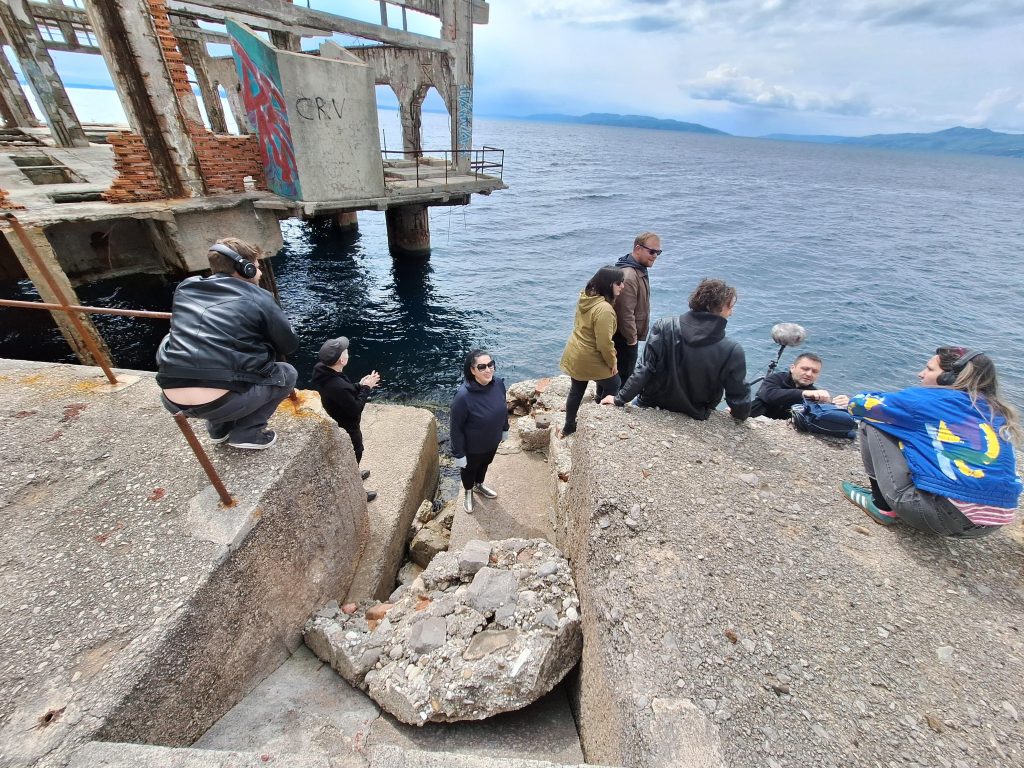
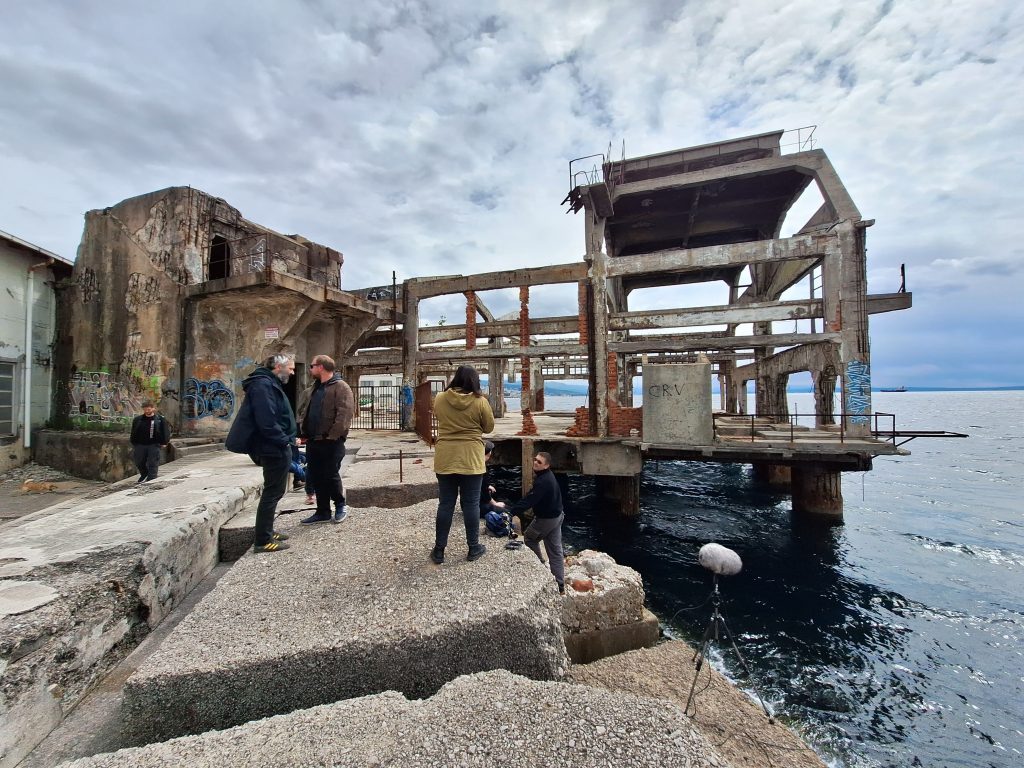
In April 2024, during the Made In residency artist Robertina Šebjanič took part in the first phase of her research of Rijeka localities which culminated with a public workshop co-mentored with a sound recordist Ivo Vičić – In / Above Water Sonic Mapping. The workshop was organized as a part of Abandon Normal Devices Fair (Sajam 3N) at the ex-Torpedo Launching Station in Rijeka. Devoted to the sonic mapping of the shore of the Adriatic Sea, this event offered audiences a chance to immerse themselves in the under/above water soundscapes of the historic landmark where torpedoes had been sent out into the sea or onto their targets. As the first torpedo has been invented in Rijeka, the locality is also a strong landmark of the city. The workshop included a practical in situ lecture/presentation about the disturbing human presence in underwater acoustics, as well as listening to the bioacoustics of aquatic environments above and under the waves at the shores, but it also served as a launching pad for Robertina to explore and research a locality of an old military complex.
 ROBERTINA ŠEBJANIČ
You must be logged in to post a comment.